Fintech · Automotive · B2B & B2B2C · Systems Design

Wunder – Credinet

THE PROJECT
End-to-end design and delivery of a regulated fintech ecosystem: conversational WhatsApp bot, multi-tenant back office, eight API integrations, and an amortisation engine: all built from scratch when no business rules existed. Result: Scaled from one dealership to 84 and increased loans issued by 410%.
The company
Grupo Arvor is a Patagonian holding group with 400+ employees and 40+ years in automotive, finance, logistics, and oil & gas. Its brands include Volkswagen Iruña, Chery Dao Sur, Foton Energy Trucks, Autonet, Qi Drive, and the lending arm Credinet, which provides 300+ vehicle loans a year.

Client / Company

Wunder – Credinet

Location

Neuquén, ARG

Role

Product lead

The short version

About the consultancy: I lead these accounts at Wiruk, an AI-driven strategy consultancy in Patagonia, Argentina. We embed with client teams, deliver real results, and charge based on outcomes, not just strategy documents.


Groundwork & El Ayudante describe the discovery and delivery systems behind this account.


Situation: Auto-loan financing at multi-brand dealerships was disorganized: no lead tracking, no traceability, and no visibility on dealer performance. Customers had to download an app, which added friction. Internal analysis of 126 rejected loans showed that 58% were avoidable with basic features like co-applicants and mixed scoring.


Challenge: Three main issues: no documented lending process, an app-based strategy that didn’t fit the WhatsApp-driven reality of sales, and no data to measure conversion or dealer performance.


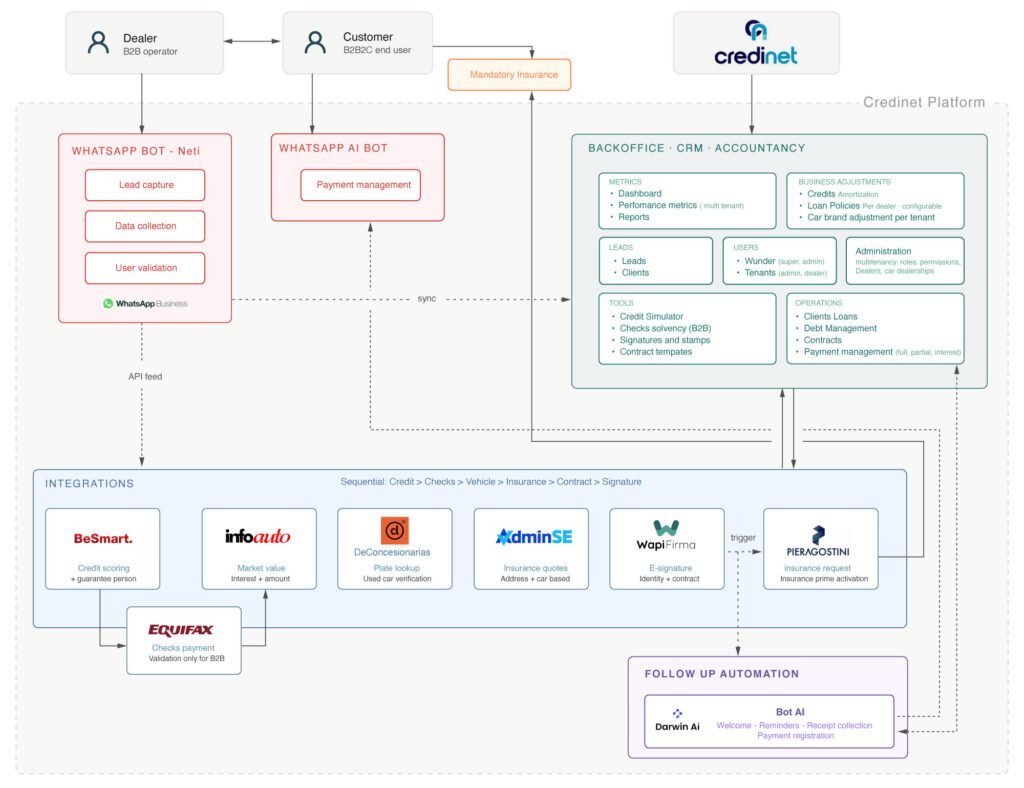
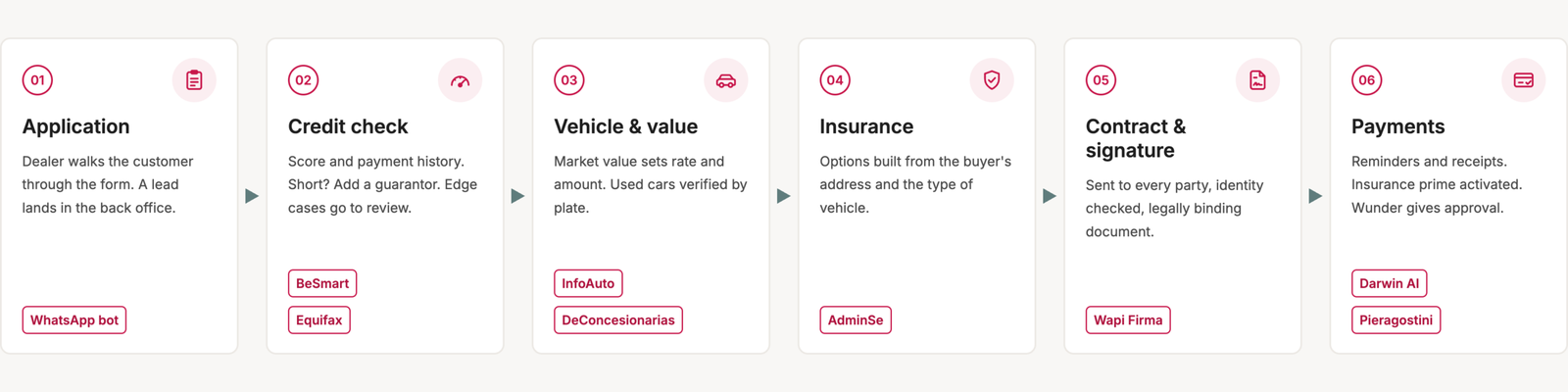
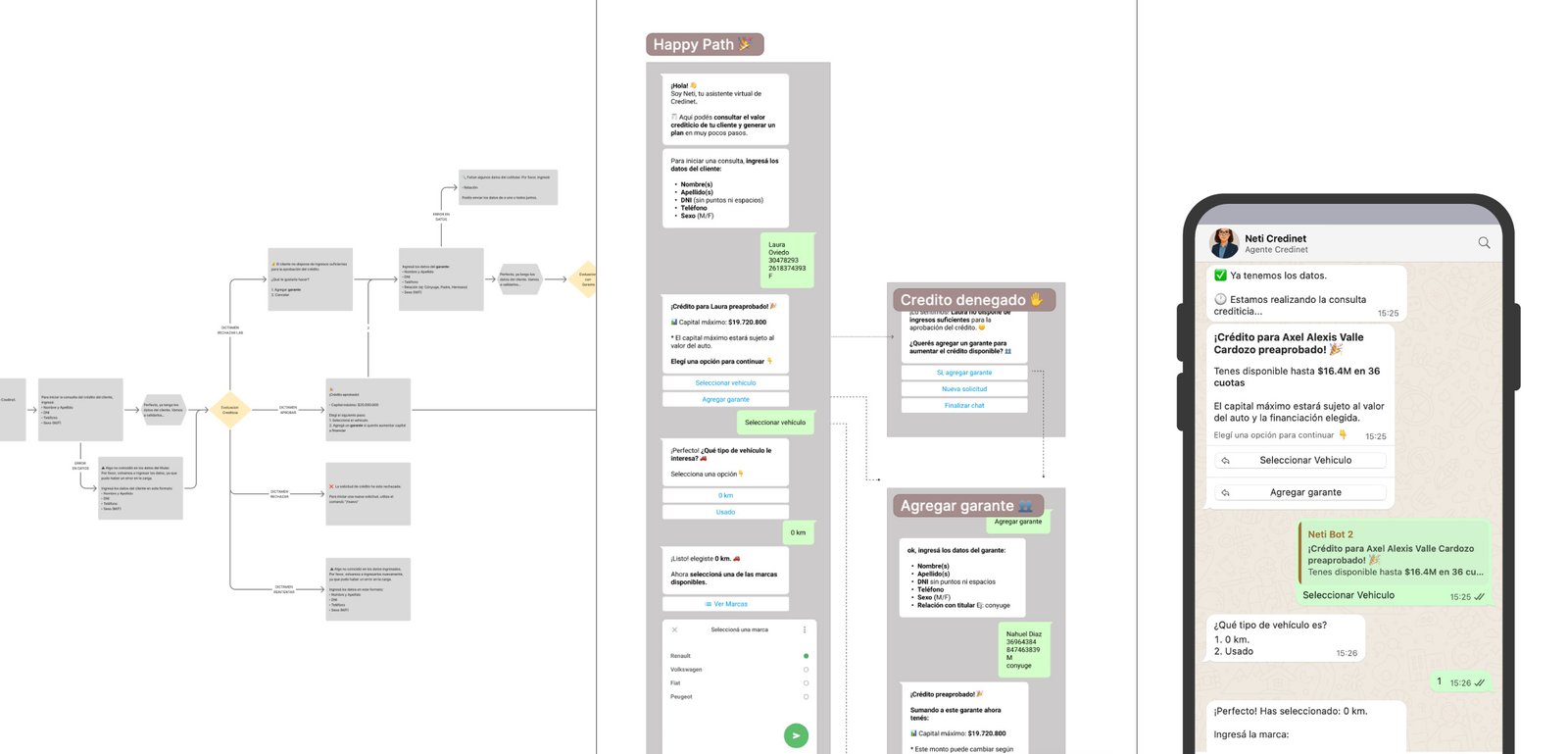
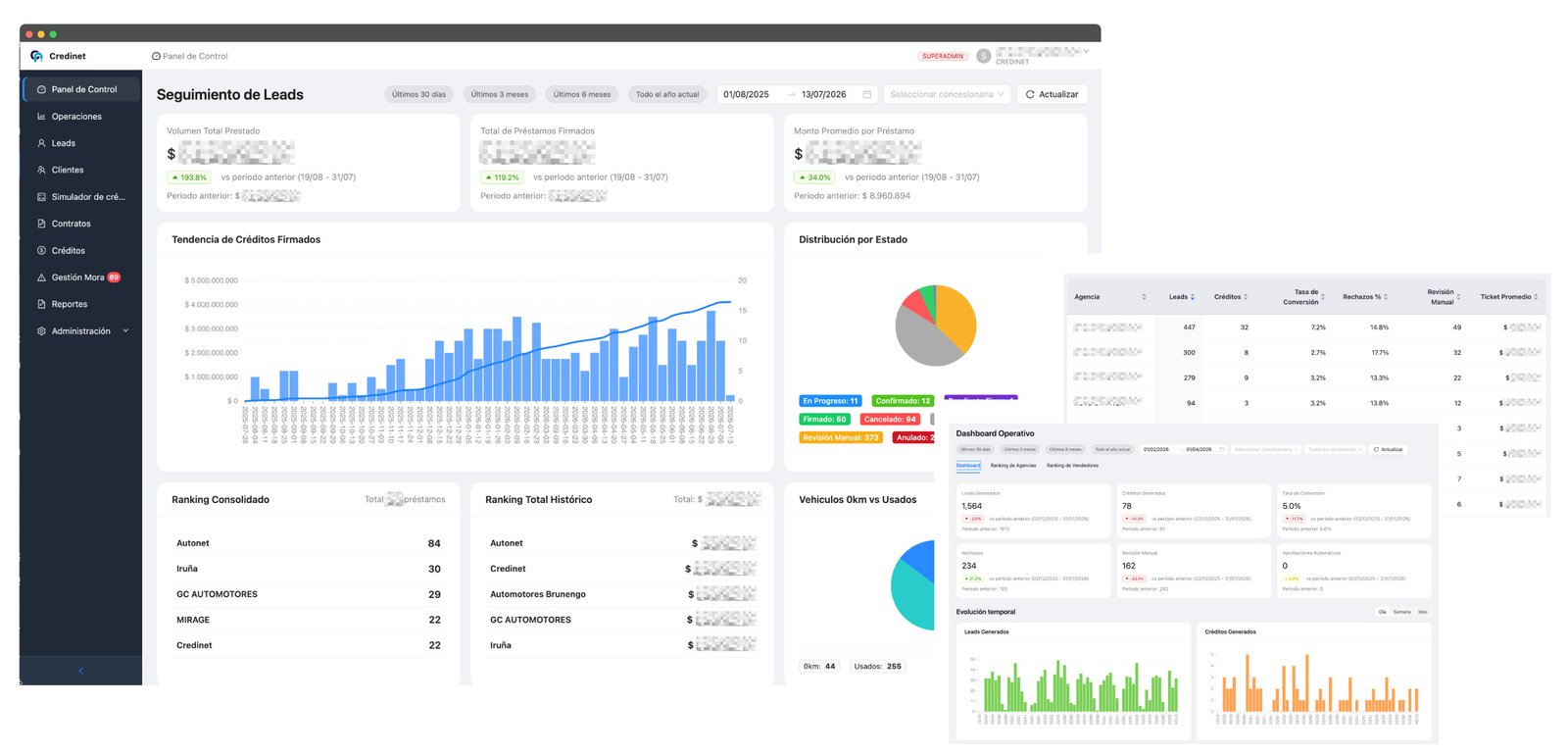
Solution: We built Wunder, an orchestrated ecosystem using a WhatsApp bot (no app, no login) and a multi-tenant back office for CRM and loan management. We combined eight regulated integrations (credit scoring, payment validation, valuation, insurance, e-signature, identity) into a single flow. A rules engine managed dealer-specific loan policies, with automatic approvals, variable-rate calculations, debt tracking, and automated reporting.


Outcome: The solution scaled from 1 to 84 dealers, with a 410% increase in signed contracts and 370% more monthly credit checks. We defined a six-release roadmap for future scaling and integration.


My role: As Product Lead & Business Manager, I directed product and design across business-rules discovery, integration, UX flows, back-office design, and roadmap. I worked with a PO and PM to coordinate a team of eight, including architects, developers, UX, and QA.
1 → 84

Car dealership

onboarded

194 min
OPEX saved
per loan

410%

Contract conversion

370%

Credit checks growth

8

Regulated integrations

System architecture diagram
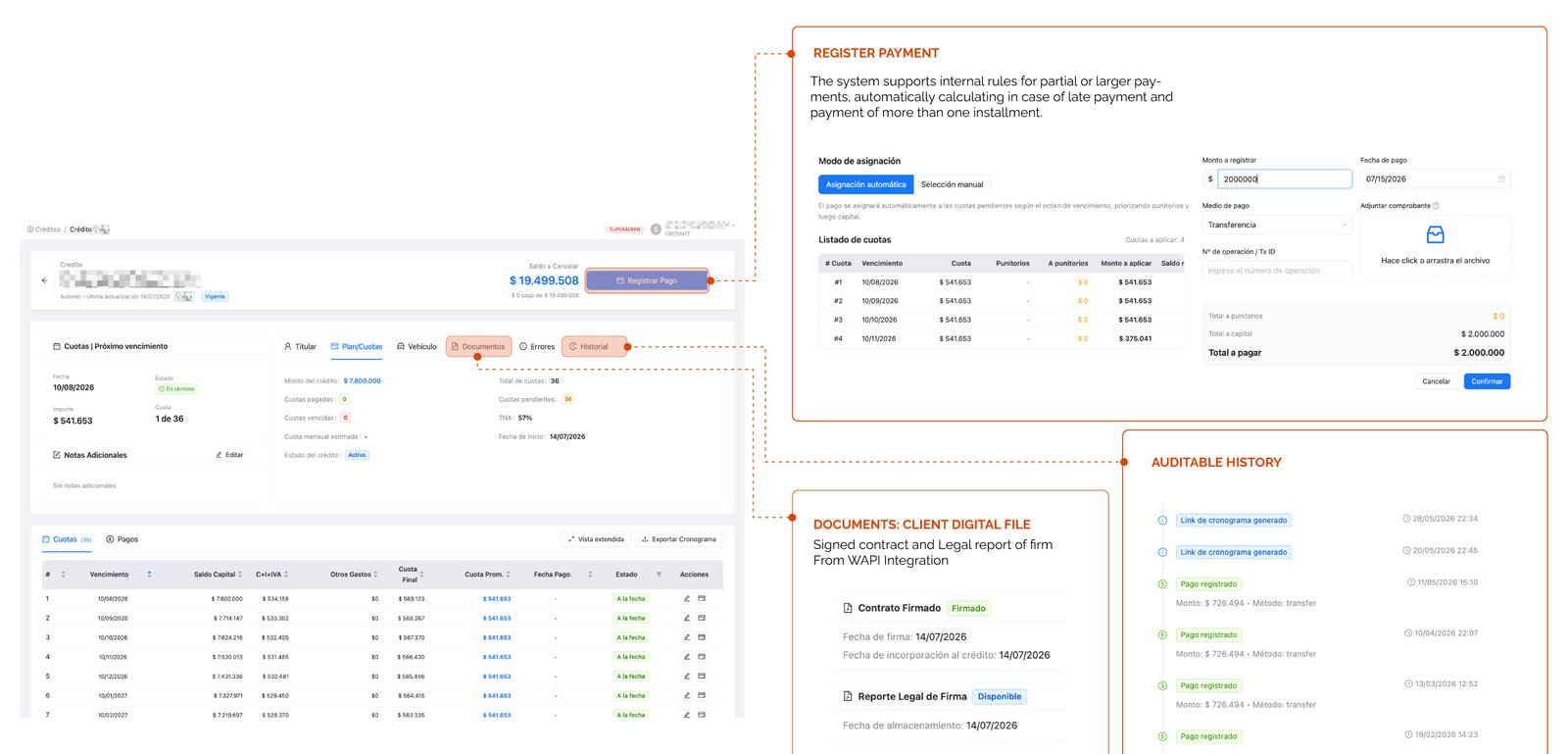
  • Built a seamless, omnichannel experience: Unified WhatsApp, backoffice, and CRM functions so that every loan, payment, and customer interaction is managed in a single, auditable system.
  • Integrated critical financial checks: Automated scoring, payment history, and valuation integrations to streamline approvals, reduce errors, and allow for flexible, risk-adjusted lending.
  • Enabled rapid compliance and customer onboarding: Designed the process to generate and execute contracts digitally, with WhatsApp-based e-signatures and real-time identity validation—accelerating deal closure and legal compliance.
  • Automated post-sale engagement: Deployed AI-driven communication for payment reminders, receipt validation, and customer support, reducing manual effort and improving customer retention.
  • Ensured end-to–end auditability: Every action, approval, and document is tracked and accessible, supporting regulatory requirements and business oversight.
The key challenge was supporting a wide variety of end users—dealerships, sellers, small businesses, and final clients, each with their own economies and operational realities. In a complex market, we had to anticipate every use case and build flexibility into the platform, translating financial complexity into tools anyone could use confidently. Use cases kept growing, and prioritizing while keeping the schedule and budget on track was a constant challenge. Success relied on listening closely, building trust, communicating clearly, and turning unwritten business rules into real, usable solutions. 

This experience reinforced the value of adaptability, empathy, and operational structure when designing for real-world impact.
SKILLS
  • Business Rules Definition
  • Product Discovery
  • MVP Definition
  • User Research
  • Wireframing
  • Interaction Design
  • Conversational UX (WhatsApp)
  • Figma
  • UI Design
  • Analytics (Mixpanel)
  • Stakeholder Management
  • Cross-Functional Alignment